
Your Georgia Sprinkler System Needs Winter Care (Yes, Really!)
Look, I get it. When you think about winterizing sprinklers, you picture someone in Minnesota dealing with three feet of snow. Not us here in Georgia, right?
Wrong.
Here’s the thing – Georgia winters might seem mild, but they can absolutely wreck your sprinkler system. And trust me, you don’t want to find out the hard way when spring rolls around and water starts shooting up from your lawn like a geyser.
Why Your Sprinklers Are Actually in Danger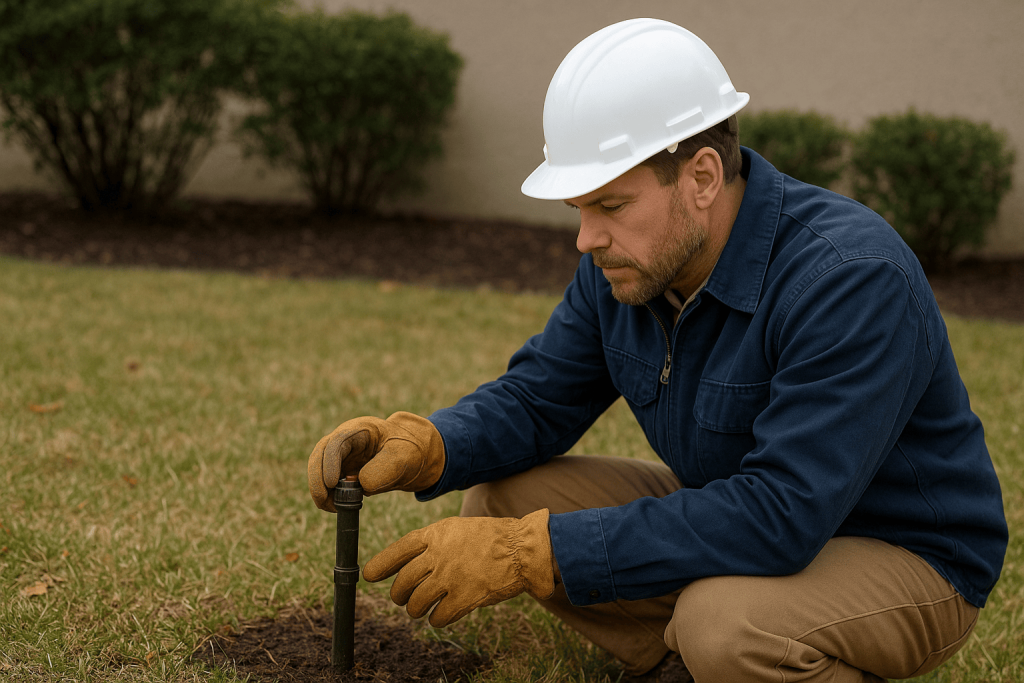
So why do we need to worry about this in Georgia? Simple. It’s not about how cold it gets – it’s about the up and down.
Think about a typical January night in Atlanta. Temperature drops to 25 degrees. Your sprinkler pipes freeze solid. Then the sun comes up and it hits 50 degrees by lunch. Everything thaws. Next night? Freezes again.
That’s worse than staying frozen all winter. Way worse.
When water freezes, it gets bigger. About 10% bigger, actually. Now imagine that happening inside your pipes. They can’t stretch. So they crack. Or they just flat-out burst.
And it’s not just the pipes. Your backflow preventer (that metal thing sticking up near your house)? Super easy to damage. Those cost anywhere from $300 to $500 to replace. Each valve that controls different zones in your yard? Yep, those can break too.
I’ve seen people ignore winterizing and then spend $2,000 fixing everything in spring. Not fun.
What’s Actually in Your Sprinkler System?
Before we talk about protecting everything, let’s look at what you’ve got buried in your yard.
The backflow preventer sits above ground, usually near where your water line comes in. It stops sprinkler water from getting back into your drinking water. Because it’s outside and full of little chambers, it breaks really easily when frozen.
Underground pipes run all over your property. These are usually PVC – that white plastic pipe. They connect to valves that turn water on and off for different areas of your yard.
Sprinkler heads pop up (or don’t) when water flows through. Some systems also have a pump if you’re using well water or a pond.
All of this stuff can break when water freezes inside it.
When Should You Do This?
For Atlanta and North Georgia: Mid to late November is your sweet spot.
Middle Georgia (Macon area): Late November to early December works.
South Georgia: Early to mid December should do it.
The rule? Do it before the first really hard freeze. That means temperatures at 28 degrees or below for a few hours straight.
Watch the weather. When you start seeing nighttime temps in the upper 30s regularly, it’s time to get moving.
How to Actually Winterize Your System
You can try this yourself or call an Atlanta irrigation pro.
There are three ways to do this. I’ll be honest up front – one of them works way better than the others.
Method 1: Manual Drain Valves
Some systems have drain valves built in at the low spots. Here’s what you do:
- Turn off the water supply to your sprinklers
- Open all the drain valves
- Run each zone on your controller to let water out
- Leave the valves open all winter
Does this work? Sort of. It gets most of the water out. But not all of it. There’s always some left hiding in the pipes.
Method 2: Automatic Drain Valves
Fancier systems have valves that open by themselves when the pressure drops. You just:
- Shut off the water
- Run each zone briefly
The valves should drain automatically.
Problem is, these can get clogged. And they still don’t get every drop of water out.
Method 3: Blow It Out with Air (This One Actually Works)
This is what the pros do. And it’s the only method that really gets all the water out.
You need an air compressor. Not just any little one – you need something that can push out 20 to 30 CFM (that’s cubic feet per minute). The PSI number matters less than the CFM.
Here’s the process:
- Shut off your water supply. This is super important. Do not skip this.
- Drain your backflow preventer. There are usually little drain valves or test cocks you open.
- Hook up your air compressor where the water comes into the system. Usually at the backflow preventer.
- Go to your controller. Start with the zone that’s furthest from where you connected the air.
- Turn on that zone and let the air push the water out through the sprinkler heads. You’ll hear them sputtering and spitting water.
- Run it for 2-3 minutes or until you only see a light mist coming out.
- Move to the next zone. Work your way back toward where the air compressor connects.
Safety stuff you need to know:
- Never go over 80 PSI. Seriously. You’ll break things.
- Don’t stand near the sprinkler heads when they’re blowing out
- Wear safety glasses
- Don’t run the air too long in one zone
If you don’t have a big enough compressor or this sounds scary, just hire someone. It’s worth it.
Don’t Forget These Other Parts
Your backflow preventer needs extra attention. After blowing everything out:
- Open its drain valves
- Some people wrap it in foam insulation for extra protection
- Just make sure air can still get to it so moisture doesn’t build up
Your controller? Leave it plugged in but switch it to “off” or “rain mode.” If you unplug it completely, you might lose all your settings.
Got a pump? Drain it according to whatever instructions came with it. Usually there’s a drain plug you remove.
Getting Ready for Spring
When warm weather comes back, don’t just flip everything on and hope for the best.
Walk around and look at stuff first. Check for:
- Cracks in pipes you can see
- Damage to the backflow preventer
- Sprinkler heads that got knocked around
Close any drain plugs you opened. Then turn the water back on slowly. Really slowly. Let the system fill up gradually.
Run each zone one at a time. Watch for leaks. Look for wet spots in your yard that shouldn’t be there.
Should You Hire Someone or Do It Yourself?
Good question.
Hiring a pro costs about $165 plus for most normal-sized yards in Georgia. They’ve got the right equipment. They know what they’re doing. And if something breaks, they’re insured.
Doing it yourself saves money – if you already have a big enough air compressor. But here’s the catch: if you mess it up, repairs will cost way more than just paying someone in the first place.
I’ve seen people blow out seals in their valves by using too much pressure. I’ve seen systems that didn’t get properly drained and still froze. Both situations cost serious money to fix.
For most folks? Just pay the $100 and sleep easy.
What Happens If You Skip This?
Let me paint you a picture.
It’s March. Beautiful weather. You turn on your sprinklers for the first time. Water shoots up from the middle of your lawn instead of from the sprinkler heads. Your water bill that month is $400 more than usual because you didn’t notice for two weeks.
The pipe repair costs $300. The backflow preventer is cracked and needs replacing – there’s another $500. Two zones don’t work at all. That’s $250 per zone to fix.
You’re out $1,300 minimum. Maybe more.
All because you didn’t want to spend $100 in November.
The Important Stuff to Remember
- Georgia’s weather is actually harder on sprinklers than you think – it’s the freezing and thawing that kills them
- Time it right – get it done in November or early December before that first hard freeze hits
- Blowing out with air is the only method that really works – the other ways leave water in the system
- Everything needs attention – pipes, valves, that backflow preventer thing, all of it
- Pros charge $75-$150 which is nothing compared to fixing a broken system
- Check everything before turning it back on in spring – catch problems early
- Safety first with compressed air – 80 PSI max, wear eye protection, stay away from sprinkler heads
- Take some pictures of your system – helps when you need to explain stuff to repair people later
Questions People Always Ask
Q: Come on, do I really need to do this in Georgia?
A: Yes! Look, I know it doesn’t get as cold as Minnesota. But we get plenty of nights below freezing. Even just one night at 25 degrees can crack pipes. And we get that freeze-thaw-freeze thing that’s actually worse than just staying cold. One hard freeze is all it takes to do thousands of dollars in damage.
Q: When exactly should I do this in Atlanta?
A: Middle to end of November is perfect. Don’t wait until January – that’s too late. But don’t do it in October when your grass still needs water. Watch the weather forecast. When you see temps dropping into the 30s at night regularly, that’s your sign.
Q: Can I use my regular air compressor?
A: Maybe. Depends what you’ve got. You need something that pushes out 20-30 CFM – that’s cubic feet per minute. Those little pancake compressors you get at Home Depot for nail guns? Not even close. If your compressor runs constantly and can’t keep up, it won’t work. When in doubt, call someone.
Q: What if I forgot and it already froze?
A: Uh oh. Well, at least shut off the water now and drain what you can. After it warms up, you’ll need to have someone check the whole system before you turn it back on. There might be damage you can’t see yet.
Q: How much does it cost to hire someone?
A: Usually $75 to $150 for a normal house. Depends on how big your system is and where you live. But think about it – that’s way less than fixing broken stuff. It’s basically insurance.
Q: I have automatic drain valves. Still need to winterize?
A: Yeah, you do. Those automatic valves help, but they don’t get everything. And sometimes they get clogged with dirt and don’t work. At least blow it out with air or have someone do it. And definitely drain your backflow preventer.
Q: Should I wrap that metal thing in insulation?
A: The backflow preventer? After you drain it completely, sure, you can wrap it for extra protection. They sell covers for this. Or use foam insulation and a plastic bag. Just don’t seal it up completely – air needs to get in or moisture builds up.
Q: Can I just turn it off for winter?
A: Nope. Turning it off just stops water from flowing. But water is still sitting in all the pipes and valves. That water will freeze. You’ve got to actually get the water out.
Q: What pressure should I use for the air?
A: Don’t go over 80 PSI. Most systems are fine at 40-60 PSI. But honestly, CFM matters more than PSI. You need good airflow, not just high pressure. High pressure with weak airflow can actually damage stuff.
Q: Every single year?
A: Yep. Every year. Even if last winter was mild. You never know when we’ll get hit with a cold snap. It’s like changing your oil – just something you do regularly.
Q: How do I know if something broke over winter?
A: Before you turn everything back on in spring, walk around and look. Check that backflow preventer for cracks. Turn the water on slowly and watch for leaks. Run each zone and look for weird wet spots in your yard. Low pressure? Heads not popping up? Those are signs something’s wrong underground.
Q: Better to do it early or late?
A: Early is safer than late. You don’t want to wait and then get surprised by a freeze. But also don’t do it while your grass still needs watering. The sweet spot is when nighttime temps hit the upper 30s and the forecast shows colder weather coming.
Q: Can I do some of it myself and hire someone for the rest?
A: Sure! Shut off your water, drain what you can, wrap your backflow preventer. Then pay someone to do the compressed air part. That’s the trickiest bit. Just tell them what you already did so they know.
Author: Micheal Golden


